


Building a digital ecosystem isn’t about adding more tools—it’s about making everything work together, safely and reliably. Rowdy Oxford Integris: Architecting the Digital Ecosystem explains how to design integrations, APIs, governance, data, and security with discipline. You’ll get practical steps, measurable outcomes, and cautious choices that prevent complexity from becoming risk.
- What is Rowdy Oxford Integris?
- Step 1: Define the ecosystem before you design it
- Step 2: Establish a reference blueprint
- Step 3: Make integration boring, reliable, and owned
- Step 4: Build APIs as products, not plumbing
- Step 5: Treat data like a governed asset
- Step 6: Security and resilience come first
- Step 7: Govern without slowing everything down
- A cautious rollout plan
- Conclusion
What is Rowdy Oxford Integris?
Online sources describe Rowdy Oxford Integris in different ways—sometimes as a systems-thinking framework and other times as an integration-focused concept. Because there is no single, authoritative definition, this article treats the term as a practical label for building connected systems, validating claims, and managing risk. It’s best approached as a cautious mindset—not a promise.
Step 1: Define the ecosystem before you design it
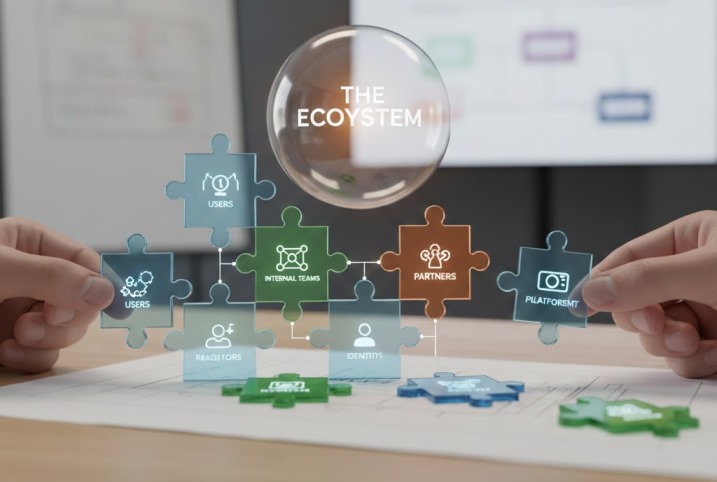
A digital ecosystem is not “everything the business uses.” It’s the set of participants who exchange value through shared services—customers, internal teams, partners, platforms, and regulators. Start with a map of value flows: identity, data, payments, and fulfillment. MIT CISR notes architecture and governance should fit strategic goals.
Step 2: Establish a reference blueprint
Your reference blueprint should be understandable to non-architects. A digital ecosystem architecture covers identity, integration, data, and security essentials.
Align the blueprint with enterprise architecture practices to reduce “special case” builds.
Think of rowdy oxford integris as the guardrail that keeps new features consistent with the blueprint.
Choose patterns that prevent fragmentation
Research combining TOGAF with Domain-Driven Design highlights how structural inconsistency creates recurring ecosystem failures.
Step 3: Make integration boring, reliable, and owned

If partners can’t exchange data predictably, your ecosystem is brittle. Use shared contracts, versioning, and test suites. When an integration platform is introduced, treat it as shared infrastructure with clear ownership, service levels, and change control—not as a shortcut for rushed fixes.
Standardize for compatibility
Design for consistent cross-system behavior by standardizing identifiers (customer IDs, product SKUs), schemas, and error handling. It reduces integration cost and avoids “mystery failures.” Set an interoperability target for each partner journey.
Step 4: Build APIs as products, not plumbing
Use API management for authentication, throttling, logging, and lifecycle governance. Use contract-first definitions.
A practical Rowdy Oxford Integris rule: every API needs an owner and an end-of-life policy.
Cloud choices: favor a disciplined operating model
A cloud-native operating model can improve scaling and deployment safety, but only if you standardize environments, automate releases, and observe services end-to-end.
Step 5: Treat data like a governed asset
Ecosystems fail quietly when data is unowned. Define a single source of truth for core entities and make changes traceable. Put data governance in place: stewardship, quality thresholds, retention, lineage, and auditing.
Step 6: Security and resilience come first
Ecosystems expand the attack surface. Threat model key flows and practice incident response with partners. Treat cybersecurity as an engineering requirement with measurable controls, not a policy PDF.
Design for failure
- Add retries with backoff
- Idempotency keys, and circuit breakers.
- Measure time-to-detect and time-to-recover.
- Done right, Rowdy Oxford Integris becomes operational maturity, not chaos.
Step 7: Govern without slowing everything down
Effective ecosystems balance autonomy with coordination. Define who can onboard partners and approve contract changes. MIT CISR notes governance choices should align with strategy, so don’t copy a model that doesn’t match your goals.
A cautious rollout plan
Pilot one use case with one partner, lock down contracts and monitoring, automate tests, then expand only when reliability targets are met.
Tie each expansion to a measurable digital transformation outcome (cycle time, cost, conversion, support load).
Conclusion
A digital ecosystem succeeds when connections are intentional, governed, and resilient. Use Rowdy Oxford Integris as a pragmatic reminder: define value flows, standardize contracts, secure data, and operate with clear ownership. Scale only what you can monitor and recover. Done right, the ecosystem becomes durable infrastructure—not fragile complexity.
