


Modding is one of the few upgrades in gaming that can feel “next-gen” without buying new hardware: sharper visuals, smarter interfaces, smoother systems, and fresh content that extends a game’s life. But the best results don’t come from installing everything you see. They come from making smart, testable changes—so your game improves without turning unstable.
This guide explains game mods lync conf as a practical workflow: what the term commonly points to, how to pick high-value modifications, and how to keep your setup reliable over time. Lyncconf’s own coverage frames mods by type—graphics, gameplay, cosmetic, and quality improvements—which is a helpful way to plan your build logically instead of stacking random downloads.
- What “Game Mods Lyncconf” means in practice
- The four mod types that deliver the biggest upgrades
- A safe installation workflow that professionals use
- How to choose mods that stay stable over time
- Skyrim as a concrete example of “foundational-first” modding
- Troubleshooting rules that prevent 80% of failures
- Conclusion
- FAQs
What “Game Mods Lyncconf” means in practice
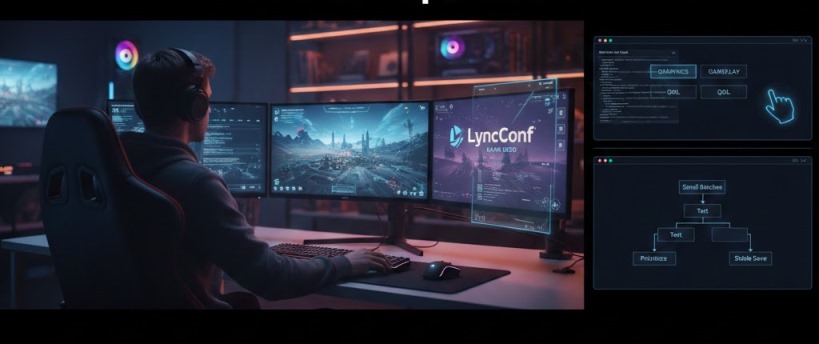
When people search lyncconf game mods, they’re usually looking for two things:
- a clear definition of mod categories (what each mod is trying to change), and
- a safe process to install and maintain mods without breaking the game.
Lyncconf’s mod category breakdown is a strong starting point because it encourages intentional choices—graphics vs gameplay vs “quality improvements”—instead of mixing everything at once.
Just as important: a “good” mod setup is not the biggest setup. It’s the setup you can update, troubleshoot, and keep stable across patches—which is the real promise behind game mods lync conf when approached professionally.
The four mod types that deliver the biggest upgrades
1) Visual upgrades (high impact, hardware-dependent)
Graphics mods typically improve textures, lighting, or weather effects. Lyncconf describes these as changes aimed at sharper visuals and enhanced lighting systems.
Start here only if your hardware has headroom, and add changes gradually so you can measure performance impact.
2) Gameplay changes (high impact, higher risk)
Gameplay mods can add quests, abilities, systems, and new mechanics. Lyncconf notes these can introduce new interactions and even entirely new gameplay mechanics.
These are often the most transformative—but also the most likely to collide with other changes—so treat them as “phase two” after your base is stable.
3) Cosmetic personalization (low risk, quick wins)
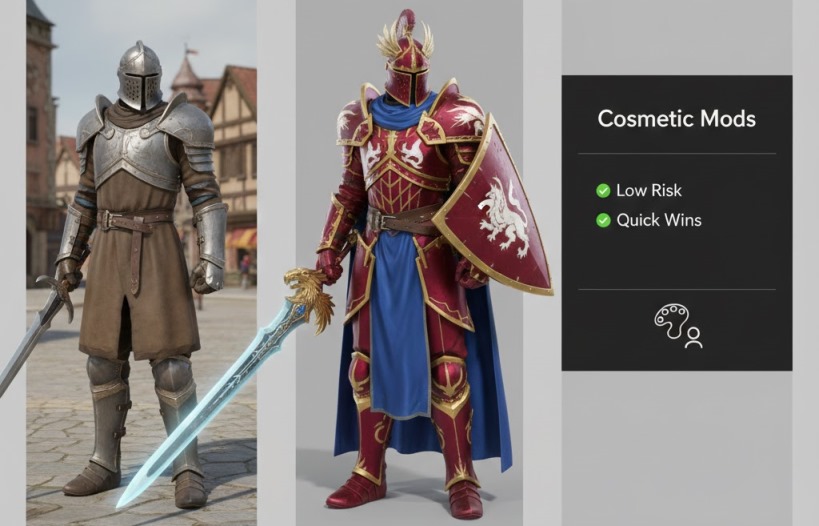
Cosmetic mods change the look of characters, vehicles, or structures.
They’re ideal for personalization with minimal technical complexity.
4) Utility improvements
This is where quality of life mods shine: better inventory handling, cleaner HUDs, and convenience tweaks that improve play without rewriting core systems.
A safe installation workflow that professionals use
A stable modded game is built like a controlled release: small changes, verified results, and easy rollback. That mindset is exactly what separates successful game mods lync conf setups from frustrating ones.
Step 1: Pick one mod manager and commit
A reputable manager reduces manual errors and keeps installs reversible. Vortex is designed to integrate with Nexus Mods, and it includes features intended to manage your mod list and help resolve issues.
Use one manager per game profile to avoid “split-brain” installs.
Step 2: Install in small batches (and test after each batch)
Install a few changes, launch the game, and confirm everything loads correctly. This turns troubleshooting into a quick “last change” check instead of a long detective story.
Step 3: Control priority and compatibility
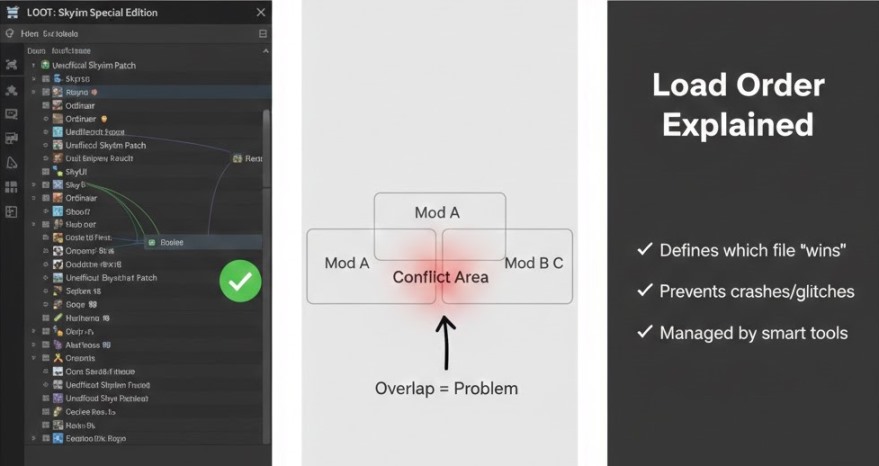
Many mod issues come from file priority and overlapping edits. Tools exist specifically to reduce that risk: LOOT is described as an automated sorting tool aimed at helping players set the right mod priority for stability.
Use it when your mod ecosystem supports it, and always read each mod’s documentation.
Step 4: Use platforms with clear dependency signals
Some ecosystems provide built-in structure. For example, Valve announced the ability to change the local priority of Workshop subscriptions in the Steam client beta.
That doesn’t remove the need to test, but it does reduce guesswork in supported games.
How to choose mods that stay stable over time
If your goal is a Google-worthy “best setup,” don’t chase hype—chase reliability signals:
- Clear documentation and install steps
- Known compatibility notes
- Recent maintenance where relevant
- Narrow scope (fewer systems touched = fewer surprises)
To make mods lync conf research actually useful, evaluate whether a mod improves a specific experience problem (UI friction, low-resolution textures, repetitive gameplay loops) and whether it does so with minimal overlap.
Also note: many modding communities recommend reading the full description page before installing, because mods often require specific steps.
That habit is one of the simplest “pro moves” in game mods lync conf workflows.
Skyrim as a concrete example of “foundational-first” modding
Some of the most widely-cited modding examples come from Skyrim because its ecosystem is mature and heavily documented. PC Gamer highlights tools and foundations like Skyrim Script Extender (SKSE) and essential interface improvements such as SkyUI, along with bug-fix staples like the Unofficial Skyrim Patch.
Even if you don’t mod Skyrim, the principle transfers: start with foundations, then expand.
If you’re exploring lyncconf mods, think in the same order: stability first, then visuals, then deeper gameplay.
Troubleshooting rules that prevent 80% of failures
A strong game mods lync conf setup isn’t one that never breaks—it’s one you can fix fast.
- Crash after a new install: remove the most recent batch, confirm requirements, reinstall carefully.
- Visual glitches: reduce overlapping graphics changes and retest.
- Performance drops: roll back heavy visuals, then re-add improvements one at a time.
This is also why lync conf mods research should always translate into a testing plan, not just a download list.
Conclusion
Approached with discipline, game mods lync conf is less about “adding more” and more about upgrading smart: pick the right category, install methodically, verify stability, and grow from a reliable baseline. When you treat modding like a controlled build—not a shopping spree—you get the upside modding promises with far fewer setbacks.
FAQs
1) What are the safest mods to start with?
Start with UI and convenience improvements that don’t rewrite core mechanics, then expand gradually.
2) Do I need a mod manager?
A manager helps keep installs organized and reversible; many players use tools like Mod Organizer 2 or manager-based workflows depending on the game ecosystem.
3) Why do modded games crash after adding “just one mod”?
Because that mod may overlap with others, require a dependency, or change files another mod already edits.
4) Can Steam handle mod priority now?
For supported games and clients, Steam’s beta has included the ability to change local priority for Workshop subscriptions.
5) What’s the #1 rule for stable modding?
Change one thing at a time, test immediately, and keep a rollback point—especially when expanding beyond the basics.
